

Using descriptive and vivid verbs helps to ensure that there is dynamic movement and a deeper connection between what your characters are doing and what your reader is seeing in their head. Without verbs, you will have wonderful characters that are mimicking Sims characters that stand around without anything to do.
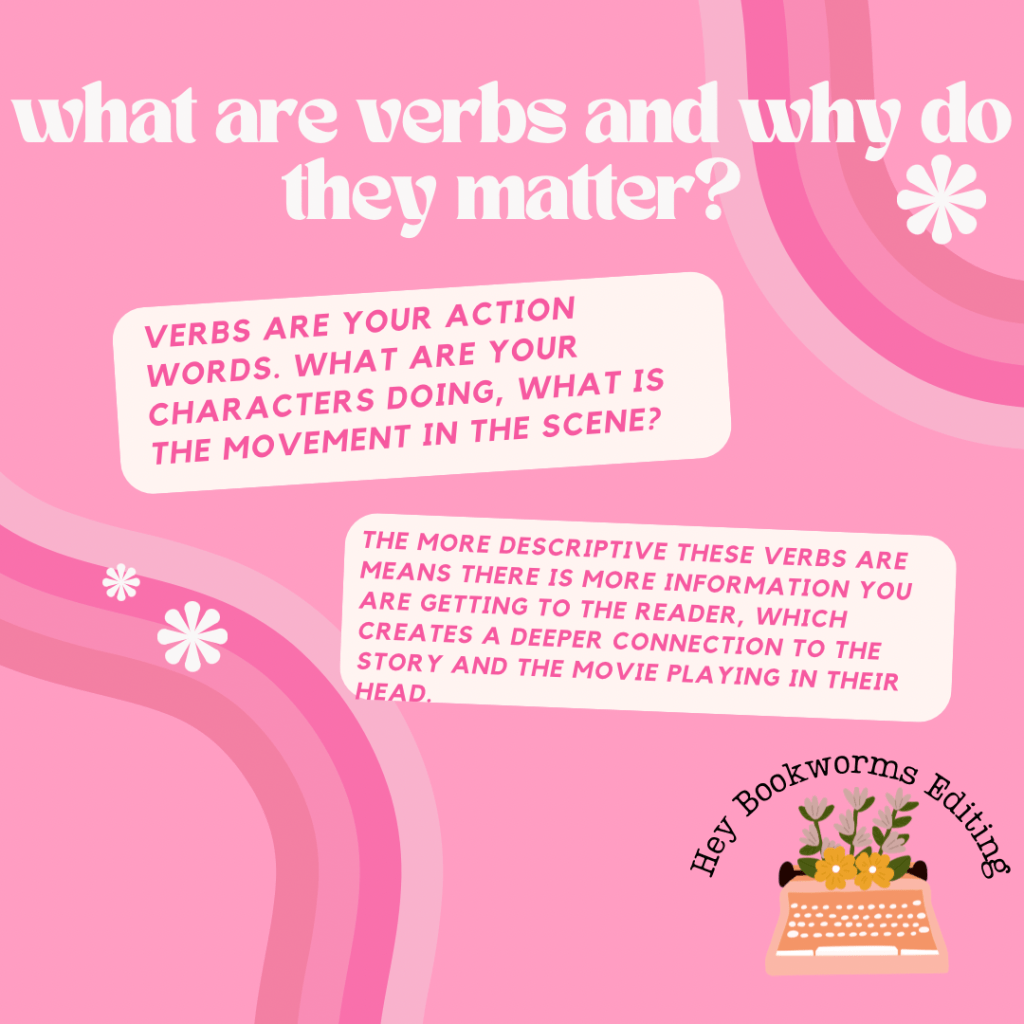
Movement obviously helps to move your character, but it helps to move the plot forward. Without action, your characters cannot do anything with the other characters or perhaps it is a mystery and there is a piece of evidence in the room with them. Without being able to search in that room the character won’t ever discover that piece of evidence.
But! You don’t want to just look. When someone says they looked for something, we don’t hardly get any information about how that happened. Did Sally scour the windowsill looking for fingerprints? Did she gloss over the papers on the table only to miss a key element?
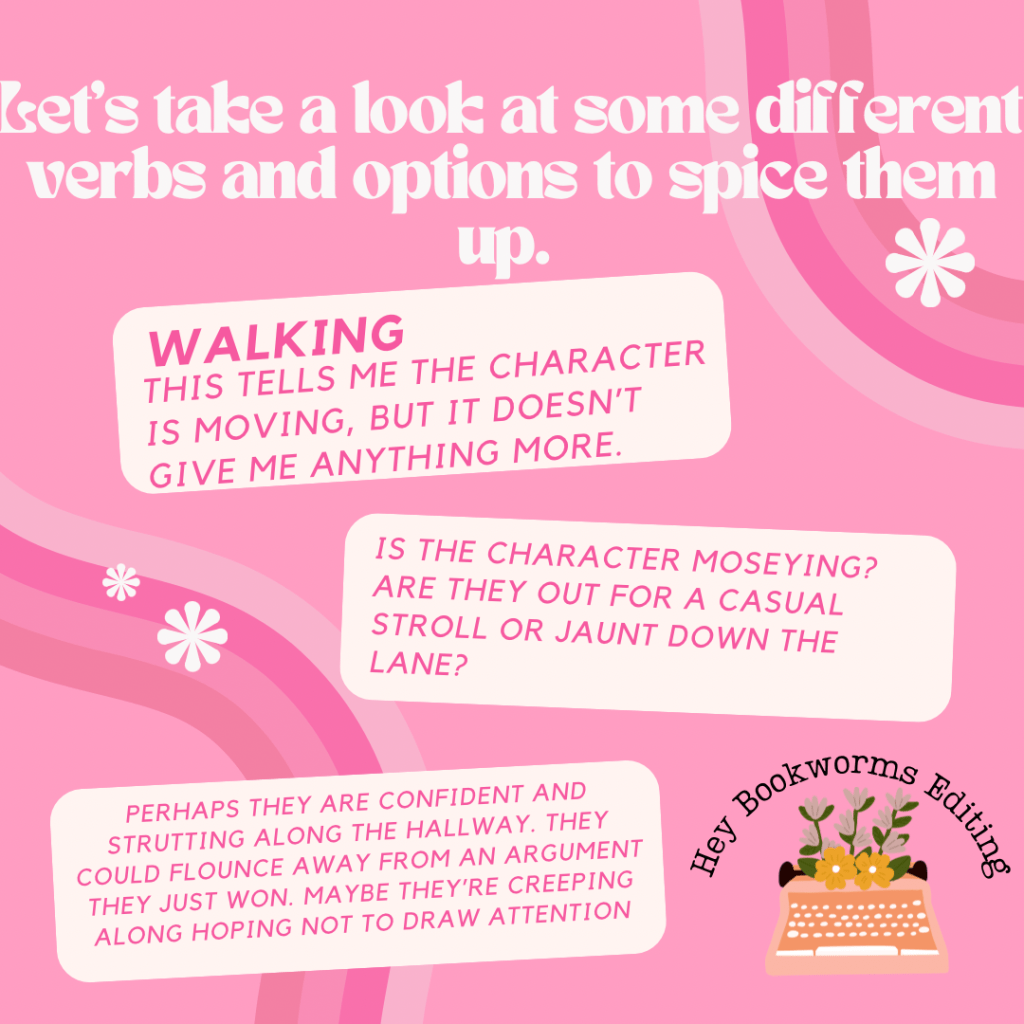
There are so many words out there that when used get the point across, but they don’t actually paint a picture unless paired with an adverb. Sure, the woman walked confidently, but when you swap walk for the word strut, now you don’t need confidently.
Here are a few words that we can swap for more descriptive verbs.
Walk: Stroll, hike, promenade, saunter, march, amble, stride, tread, pace, toddle, totter, stagger, perambulate
Run: Sprint, dart, bolt, canter, gallop, trot, zoom, hurry, speed, jog, saunter, scamper, hurtle, rush, scramble, spring, swing, swoop, dive, careen
Look: Observe, glance, stare, examine, peek, study, notice, see, glare, glaze over, scour, investigate
Go: Leave, depart, shift, take off, move on, quit, exit, take a hike, travel, drive, proceed, progress, run, walk away
Using these alternative verbs along with sensory details, you can enhance your readers’ experience! PS, if you need help with sensory details, you can find my post here!

Using say or said is totally fine! Once again though, we can give the reader more! The characters can shout, they can holler, they can stutter or mumbler, they can spit words like fire or groan them.

Saying there is something in the scene is an easy way to start painting the picture in the reader’s head, but with so many words available to us, we can swap out those two words with more vivid imagery.
There was a horn honking in the distance can go from that to: John jumped at the sound of a horn blaring through the silence, jolting him from his trip down memory lane.

Remember, it is always okay to keep things simple in some aspects. Everything doesn’t have to be flowery prose and if someone simply said something, then use that!

If these prompts don’t speak to you, snag a couple lines from one of your recent works and see about trying to rewrite them!
As always, I am a friendly and experienced copy editor with a passion for taking your written work from good to great! I’m always only a message away to chat! Feel free to drop a quick line in the comments and answer one of the prompts!
Cheers!
Discover more from Hey Bookworms Editing
Subscribe to get the latest posts sent to your email.

 Hey Bookworms Editing